Analysis
America's High-Income Small Towns, Mapped From the Data
We searched all 31,526 places for the small towns where the typical household out-earns almost everywhere else. Where they cluster — and why the very richest hit a ceiling in the data — tells a story about American wealth.
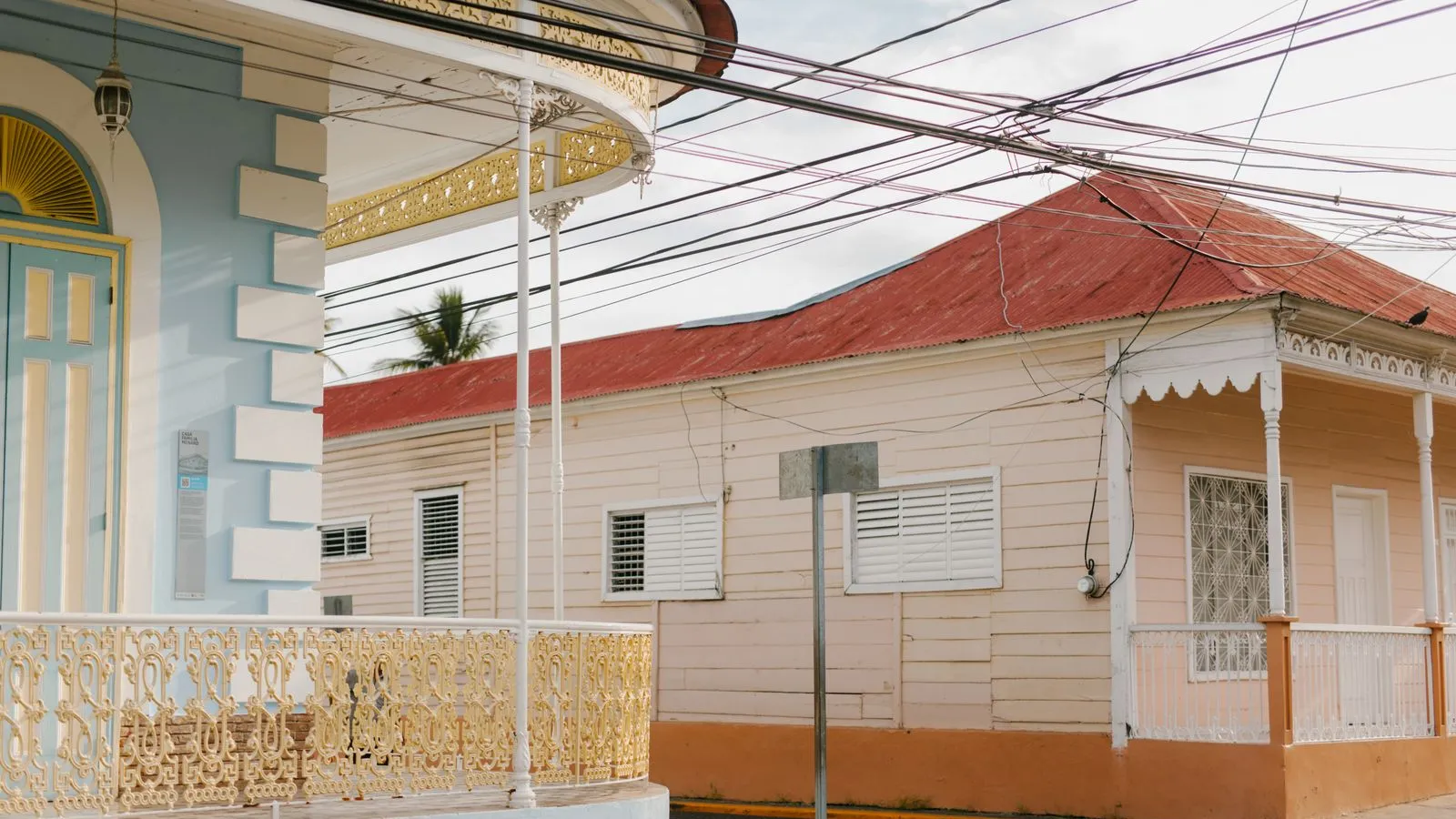
Ask where America’s wealth lives and most people picture big coastal cities. The data points somewhere quieter. Some of the highest household incomes in the country aren’t in the major metros at all — they’re in small, leafy towns of a few thousand people, tucked just outside the biggest job markets. We went looking for them across all 31,526 places in our dataset, and the pattern that emerged is remarkably tight.
How we searched
We filtered to places with between 5,000 and 25,000 residents — big enough for the Census to publish a more stable income estimate than the smallest communities, small enough to count as a town rather than a city — and sorted by median household income. Of 4,893 places that size with a published figure, 451 have a median household income above $150,000, and 142 clear $200,000. For comparison, the national median is $80,734. These places aren’t a little above average; the typical household in them earns two to three times what the typical American household does.
At the very top, the data does something worth explaining before we go further.
The ceiling at $250,001
The American Community Survey stops recording household income above $250,001 — a privacy practice called top-coding. In the wealthiest enclaves, so many households sit above that ceiling that the median itself lands right at it. The number isn’t wrong; it just means the true middle is at least a quarter-million dollars, and the survey stops counting there.
That’s exactly what happens at the top of our small-town list. A whole cluster of towns reports a median household income of precisely $250,001 — the survey’s way of saying “off the chart.” To tell them apart, you have to look past income to home values, which aren’t as tightly capped:
| Town | Median income | Median home value | Adults with a bachelor’s+ |
|---|---|---|---|
| Atherton, CA | $250,001+ | $2,000,001+ | 83% |
| Hillsborough, CA | $250,001+ | $2,000,001+ | 84% |
| Piedmont, CA | $250,001+ | $2,000,001+ | 88% |
| Cherry Hills Village, CO | $250,001+ | $2,000,001+ | 83% |
| Winnetka, IL | $250,001+ | $1,337,800 | 87% |
| Old Greenwich, CT | $250,001+ | $1,844,700 | 85% |
When both income and home value hit their respective ceilings — as they do in the Bay Area enclaves — you’re looking at a place so wealthy the survey can’t resolve the top of it. That’s its own kind of finding.
Just below the ceiling
Because the very top is top-coded, the most useful readable numbers sit just under it — the towns whose median income lands in the $240,000s, extraordinary but below the cap, so the actual figure shows through. They tell the same geographic story:
| Town | Median income | Median home value |
|---|---|---|
| Kentfield, CA | $249,896 | $2,000,001+ |
| Glencoe, IL | $248,933 | $1,432,500 |
| Paradise Valley, AZ | $247,159 | $2,000,001+ |
| Rye Brook, NY | $246,944 | $1,016,100 |
| Floris, VA | $246,058 | $872,800 |
The readable figures reinforce the same geography: Bay Area and Arizona enclaves pair near-ceiling incomes with top-coded home values, while New York and Chicago suburbs can show comparable incomes with lower — though still very high — home values. Once more, the same paycheck buys markedly more house away from the most expensive western markets.
Three corridors hold most of them
The striking thing isn’t that rich small towns exist — it’s how few places they’re near. Nearly all of the highest-income small towns sit in three metropolitan orbits.
The San Francisco Bay Area. Atherton, Hillsborough, Piedmont, Woodside, Los Altos Hills, Orinda — a dense band of towns ringing Silicon Valley and San Francisco, where tech equity and severe housing scarcity have combined to produce the most extreme wealth concentrations in the country. Here median home values pin the $2,000,001 ceiling as reliably as incomes do.
Connecticut’s Gold Coast. Old Greenwich, Riverside, Noroton — the Fairfield County shoreline within commuting distance of Manhattan, long the bedroom communities of Wall Street. High incomes, but home values that, while enormous, sit below Bay Area levels — a reminder that even among the wealthiest towns, the West Coast housing squeeze is in a category of its own.
Chicago’s North Shore. Winnetka, Glencoe, Hinsdale — affluent suburbs along Lake Michigan north and west of Chicago. Incomes here also top out at the ceiling, yet home values run “only” around a million dollars, well below the coasts. Same income ceiling, a third of the housing cost: Midwestern wealth buys far more square footage than coastal wealth does.
What ties the three together is proximity to a major job engine. These aren’t self-contained rich towns in the middle of nowhere; they’re the highest-income sorting outcomes of the country’s biggest metros — the places their top earners moved to.
What the pattern says
A few things stand out once you see the whole set laid out.
Wealth clusters far more tightly than income data alone suggests. The gap between these towns and an ordinary middle-class suburb ten miles away is not gradual. American affluence sorts itself into small, specific enclaves, and the boundary between “very comfortable” and “top-coded off the survey” can be a single town line.
Education tracks the money almost perfectly. In nearly every town on the list, more than 80% of adults hold at least a bachelor’s degree — against 36% nationally. High-income small towns are overwhelmingly high-education small towns. The two are so tightly bound that you could nearly predict one from the other, a link we explore in where college degrees cluster.
The coasts and the interior are different games. Bay Area and Gold Coast towns pair top-coded incomes with top-coded or near-top-coded home values; the same income in a North Shore or Denver enclave comes with a home that costs half as much or less. Identical paychecks, very different balance sheets — the clearest possible illustration that a dollar of income is not a dollar of buying power once you cross a state line.
If you want to go further, our richest cities and richest counties rankings widen the lens to larger places, and every town named here has its own full profile a click away. The method is simple and repeatable: filter the whole country to a size band, sort, and read what the map is telling you. In this case it’s telling you American wealth lives in surprisingly small, surprisingly specific places — and that the very top of it is literally off the chart.
Updated September 4, 2026.
Figures in this article are drawn from the U.S. Census Bureau's 2020–2024 American Community Survey (ACS) 5-Year Estimates, the same source behind every city, county, and state profile on this site. Estimates pool five years of survey responses, so small differences between closely ranked places can fall within the margin of error. See our methodology and glossary for details.